
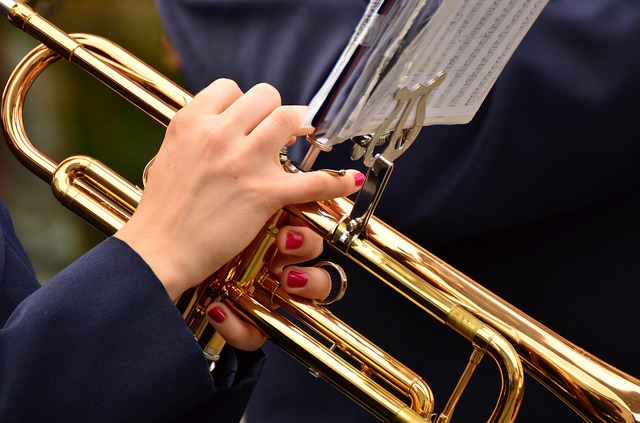
Rhythm is essential in any musical genre. To place a beat intricately and consistently and steadily throughout a piece, no matter the piece, can set a tone that can shape your aurora, emotions and drive. You want to alter your perception of your current reality, jam out loud and proud. You want to relish in the moment, set the tone. Music is one creation that can truly touch the soul and offer inspiration which has moved us all one way or another. Fun fact; music is the only activity that can activate your entire brain all at once. Now what if we take these lessons of music, dissect the essence and blueprint, and apply this to education?
You can easily decipher a difference between a solo singer and a person just talking I assume. What is it that makes those notes touch our emotions, graze our soul, invoke our thoughts and memories? With balance, tone and rhythm, the combination can carry you to new levels. When education is reinvented these three key ingredients must be considered; balance, rhythm and tone. Let’s do some imagination, collaborating, and some brain bubbling to decipher how we can re-tool our curriculum, our subjects and even our walls to enlist these three cores.
Great leaders guide, inspire, provide expectations, they are not power hungry.
Balance is essential to all aspects of life; work and family/friends, healthy and treats, and even sleep and no sleep. Without the function of balance, we lean too much to one causing an unsettled conscious and self-stress factor. When we drive our classrooms to be one sided in power, stress levels will go up in the classroom. You will always have students that will challenge the power, inevitably causing the classic power struggle. If you provide the opportunity of a shared community in the classroom, you have changed the dynamics and modeled the opportunity for collaboration and authentic community partnerships. You balanced the power to all, not just one. Many confuse leadership in the classroom as the one with the power, but I ask, if you need power to be a leader are you actually leading, or are you attempting to dictate? Great leaders guide, inspire, provide expectations, they are not power hungry.
Balance in our curriculum creates the opportunity for our students to truly experience education. Too often curriculum is hefty towards reading and writing. There is nothing wrong with this, and I am in no way advocating removing this. But as Einstein stated, “If you judge a fish by its ability to climb a tree, it will live its whole life believing that it is stupid.” Let us face the facts; we have students that are not strong in reading and writing, for whatever the reason. By basing our curriculum solely on this measurement of success, you will once again create the power struggle. Be smarter than the 5th grader and actually have a plan in the curriculum for all learners. Creating a balanced approach in curriculum based on choices and a variety of opportunities for learners to demonstrate their knowledge based on their strengths, we will no longer be judging the fish on its ability to climb the tree, but rather how well they swim. We created an unbalance in our curriculum, causing students to be pinned against one-another based on others strengths. The strengths that the adults want to see groomed.
Tone is one of the most powerful aspects to an educator and to education.
We all heard the phrase, “set the tone.” But did you realize that you can?! One of the best things I have heard was from a student. I was going through a rough patch, and I was an unusual grumpy teacher, ultimately changing the entire dynamics of the class. We all have had our moments. One of my students took me aside and told me some honesty, “Mr. Posante, I know things are rough for you right now, but we need you to be you. We need you to help us.” Taking a moment to really soak in this reality, processed this truth, and truly reflected upon it, the class needed me to set the tone. They needed me to show them what it means to believe in something, what it means to trust, what it means to be inspired and encourage. You see, tone in the classroom is reflected in the immeasurable. Tone is the emotions of the room, the building and even the community. With the wrong tone, literally schools can close due to students leaving, staff leaving, and reputations ruined. Tone is one of the most powerful aspects to an educator and to education.
Tone to me can easily be transferrable the term motivation as well. With the intrinsic tone with understanding the many linear and holistic layers of the emotions, as well as the extrinsic tone of the setting of the plot throughout the journey for the students. Instead of having the traditional assembly line of subjects and rooms to report to base on a timed schedule, what if our buildings provided learning centers for groupings of age levels. Perhaps K-2 would be grouped, 3-5, 6-8, 9-10, and 11-12. Within these groupings students will have centers where they choose to go to where a variety of learning takes place based on their learning styles, and within these centers the entire curriculum is blended and cross-curricular. We totally throw out the traditional approach of subjects, and just mesh them all together in every learning center. Let’s be honest, in real life this is how we all operate, so why segregate the subjects when learning about them? With this approach students are more forced to be more accountable and honest to their own strengths, otherwise they will struggle by choosing classes based on where their friends are.
Rhythm is all in the timing of it all.
Rhythm is all in the timing of it all. We can look at the traditional time schedule of school, the timing of each subject area, the timing of the year, and even the timing per unit. If the timing is wrong the rhythm is off. We need to reevaluate the timing of when students are in school, and many High Schools throughout the U.S. are now taking this into consideration based on research. The timing of the educational experience for our students and staff needs to have an appropriate flow, allocating to the highs and lows of young children’s processing capability. Almost every school in K-8 in the U.S. starts with 2 subjects; ELA and Math. Why? Because the students little brains are more active during this time, and schools get funded based on those scores. I always find this curious considering you can apply Math and ELA to all other subjects. This traditional approach provides bad rhythm towards all the other subjects, leading to students to have the inevitable brain-drain in the afternoon hours.
In order to all, or even any of this, we need to totally revamp the entire education system. This by no means is an easy feat. When I say the entire education system, you must look at the cycle; Pre-K, K-2, 3-5, 6-8, 9-12, and especially the University level where we are training specifically the next generation of educators. We need to find the music again in education.